
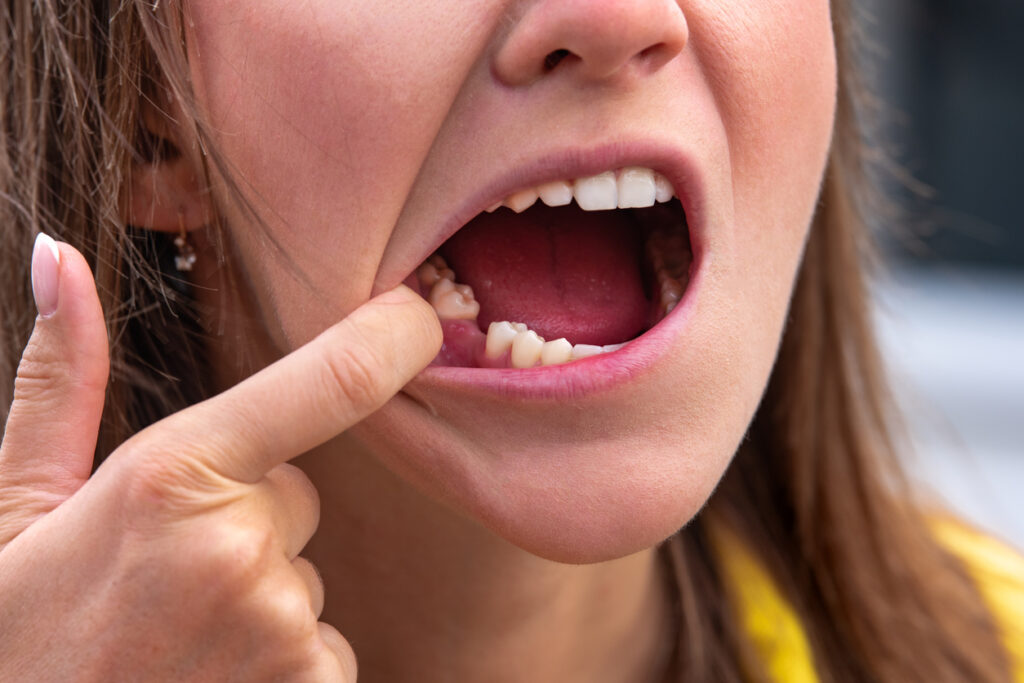
Managing bleeding after a tooth extraction at Azalea Dental involves applying firm, continuous pressure to the empty socket with sterile medical gauze for 30 to 45 minutes. Clinical literature supports that post-extraction bleeding typically stops within eight hours after extraction [1] (Kumbargere et al., 2018). While light pink oozing is normal for the first 24 hours, active, heavy bleeding requires immediate clinical intervention to prevent excessive blood loss.
Unexpected Physical Triggers That Restart Bleeding
Medical literature supports that post‐extraction bleeding (PEB) is a recognized, frequently encountered complication in dental practice [2] (Kumbargere et al., 2018). Bleeding often happens because of hidden physical triggers that spike the blood pressure in your head. Bending over to tie your shoes or pick something up off the floor forces a rush of blood to your jaw, which can easily displace a fragile clot. Similarly, holding in a sneeze, coughing aggressively, or blowing your nose creates a massive, sudden pressure vacuum in your facial cavities. For the first 48 hours, move carefully. If you need to pick something up, bend at the knees while keeping your head upright. If you feel a sneeze coming on, keep your mouth open to let the pressure escape safely.
How Daily Medications and Supplements Affect Clotting
When we think of blood thinners, we usually think of prescription cardiovascular medications like Warfarin or Eliquis. Clinical evidence suggests that the risk of significant bleeding is higher with warfarin than with direct oral anticoagulants [3] (Umerah et al., 2026). However, many wellness-focused patients accidentally thin their blood using over-the-counter supplements. Daily vitamins such as Fish Oil, Vitamin E, and high-dose Turmeric are natural anticoagulants. If you take these supplements right before or immediately after your extraction, your body will struggle to form a solid blood clot, leading to prolonged oozing. This is exactly why Dr. Barbaro conducts a comprehensive medical review before your procedure. By pausing specific supplements a few days before your visit, you set your body up for a fast, blood-free recovery.
Table that compares bleeding management techniques
Intervention strategy | Cost | Relief | Maintenance level |
Sterile gauze pressure | $0 | Immediate | Low |
Black tea bag | $5 | Highly effective for oozing | Low |
Clinical sutures | Standard | Permanent clinical closure | No at-home maintenance |
Clinical Solutions: How We Stop Stubborn Bleeding in the Office
At Azalea Dental, we have access to advanced, medical-grade tools that stop bleeding in minutes. If you return to our clinic, we will gently numb the area to keep you completely comfortable. Dr. Barbaro may place a specialized hemostatic dressing (like Gelfoam) directly into the socket. This dissolving sponge acts as a highly absorbent matrix that forces your blood to clot instantly. Medical research shows that local haemostatics have limited value in these cases, as they only temporarily stop bleeding [3] (Kumbargere et al., 2018). In some cases, we will place one or two tiny, dissolving sutures (stitches) to physically pull the gum tissue tightly together over the wound. The entire emergency visit is fast, painless, and provides immediate peace of mind.
Emergency Room vs. Azalea Dental: Where to Go
When a dental bleed will not stop, many residents instinctively drive straight to the hospital emergency room. Unless you are feeling dizzy, faint, or experiencing a true life-threatening medical emergency, the ER is usually an expensive detour. Hospital emergency rooms are not staffed with dentists. An ER physician cannot easily stitch a tooth socket or apply dental-specific hemostatic agents. In most cases, they will simply hand you medical gauze, charge a massive hospital facility fee, and tell you to call your local dentist anyway.
When is Your Extraction Site Officially Safe from Bleeding?
The first 12 to 24 hours are the most critical; this is when the clot is soft and fragile, most likely to ooze. By the 48-hour mark, that blood clot has typically solidified into a dense, firm matrix. While the gum tissue itself will take a few weeks to completely close over the hole, the risk of sudden, spontaneous bleeding drops after the second day. Once you cross that 48-hour threshold, you can confidently relax knowing the bleeding phase of your recovery is officially over.
FAQS
1. Does sleeping flat cause my extraction site to bleed more?
Yes. Lying completely flat increases the blood pressure in your head and jaw. This elevated pressure can push the newly formed blood clot out of the socket. Always sleep with your head elevated on a few extra pillows for the first two nights.
2. Can I take Aspirin for the pain if my extraction is still bleeding?
No. You should never take Aspirin following a surgical procedure unless explicitly directed by a doctor. Aspirin is a powerful blood thinner that prevents your blood from coagulating. Taking it will cause your extraction site to bleed more heavily and for longer.
3. How often should I change my gauze?
You should change your gauze only when it is completely saturated with dark red blood, typically every 30 to 45 minutes. Changing it too frequently removes pressure from the socket and continually tears away the delicate layers of the forming clot.
References
[1] Kumbargere Nagraj, S., Prashanti, E., Aggarwal, H., Lingappa, A., Muthu, M. S., Kiran Kumar Krishanappa, S., & Hassan, H. (2018). Interventions for treating post-extraction bleeding. The Cochrane database of systematic reviews, 3(3), CD011930. https://doi.org/10.1002/14651858.CD011930.pub3
[2] Kumbargere Nagraj, S., Prashanti, E., Aggarwal, H., Lingappa, A., Muthu, M. S., Kiran Kumar Krishanappa, S., & Hassan, H. (2018). Interventions for treating post-extraction bleeding. The Cochrane database of systematic reviews, 3(3), CD011930. https://doi.org/10.1002/14651858.CD011930.pub3
[3] Umerah Co, Momodu II. Anticoagulation. [Updated 2023 Jul 17]. In: StatPearls [Internet]. Treasure Island (FL): StatPearls Publishing; 2026 Jan-. Available from: https://www.ncbi.nlm.nih.gov/books/NBK560651/
[4] Kumbargere Nagraj, S., Prashanti, E., Aggarwal, H., Lingappa, A., Muthu, M. S., Kiran Kumar Krishanappa, S., & Hassan, H. (2018). Interventions for treating post-extraction bleeding. The Cochrane database of systematic reviews, 3(3), CD011930. https://doi.org/10.1002/14651858.CD011930.pub3